The AI image generation landscape has matured considerably since the early days of DALL-E and Midjourney. What was once a novelty has become a practical tool for designers, marketers, and hobbyists. But with over a dozen serious contenders now available, choosing the right model for a given task has become its own challenge.
We tested 8 models across seven metrics—quality, prompt accuracy, creativity, realism, image editing, speed, and content freedom—to see how they stack up in real-world use.
The Current State of AI Image Generation
The field has largely consolidated around diffusion-based architectures, though implementations vary significantly. OpenAI's multimodal approach with GPT-4o brings strong language understanding to image generation, while dedicated image models like Flux optimize purely for visual output. Neither approach is universally better; they serve different needs.
Pricing models have also diversified. Some platforms charge per generation, others offer subscriptions, and a few maintain genuinely useful free tiers. The gap between free and paid options has narrowed—free models now produce results that would have been premium-tier two years ago.
Top Performers by Category
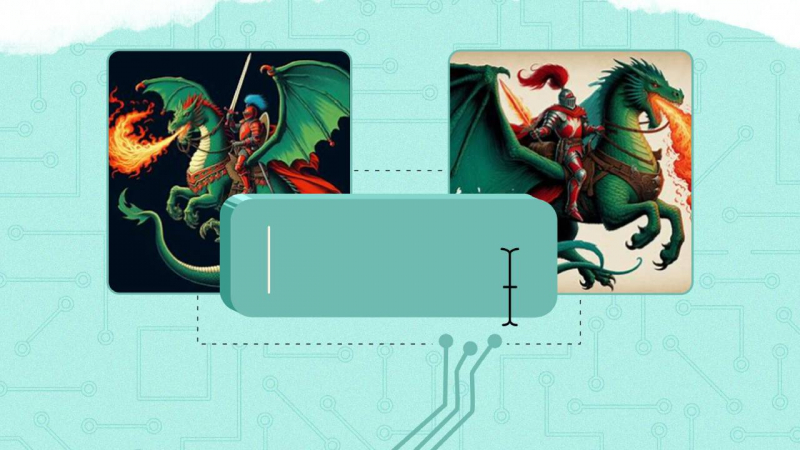
Best Overall: ChatGPT (GPT-4o) — 9.2/10
OpenAI's integration of image generation into ChatGPT brings exceptional prompt interpretation. The model understands context, handles complex scenes with multiple elements, and rarely misinterprets instructions. The tradeoff is speed—it's not the fastest option—and occasional over-smoothing of textures. For work requiring precise adherence to a brief, it's currently unmatched.
Best for Artistic Work: Nano Banana Pro — 9.0/10
Where most generators produce technically competent but somewhat sterile images, Nano Banana Pro outputs feel more intentional. There's a visual character to its work that's harder to achieve with other models. This makes it less suitable for photorealistic work but excellent for illustrations, concept art, and projects where you want the AI to contribute creatively rather than just execute.
Best for Photorealism: Flux 2 — 8.8/10
Flux 2 handles photorealistic rendering better than its competitors, particularly for portraits and product photography. It also supports image editing—feeding in an existing photo and modifying it via text prompts—which most models still lack. The model is slower than average, but for realistic output, the wait is justified.
Best for Speed: SeeDream — 8.6/10
When rapid iteration matters more than maximum quality, SeeDream delivers. Generation times are roughly half those of comparable models, with only modest quality reduction. Useful for exploring concepts quickly before committing to a slower, higher-fidelity generation.
Qwen — 8.4/10
Alibaba's entry into image generation offers solid all-around performance. Qwen handles a variety of styles competently and produces consistent results. It doesn't excel in any single category but rarely disappoints either—a reliable workhorse for general use cases.
Flux — 8.2/10
The original Flux model remains a capable option despite being overshadowed by its successor. It offers good prompt accuracy and reliable quality at a lower computational cost than Flux 2. For users who don't need the newer model's image editing features, it's a practical alternative.
Z-Image Turbo — 8.5/10
Z-Image Turbo prioritizes generation speed without sacrificing too much quality. It's noticeably faster than most alternatives, making it practical for workflows requiring high volume or rapid exploration. Quality sits slightly below the top tier, but the speed advantage is substantial enough to justify the tradeoff for many use cases.
Best Free Option: Stable Diffusion — 7.6/10
For users unwilling to pay, Stable Diffusion remains the most capable free model. It won't match premium options, but it's entirely adequate for casual use and learning. The quality gap between free and paid has compressed significantly—Stable Diffusion today outperforms what cost $20/month in 2024.
Comparison Table
Model Quality Prompt Creativity Realism Speed ChatGPT (GPT-4o) 5/5 5/5 4/5 4/5 4/5 Nano Banana Pro 5/5 4/5 5/5 4/5 3/5 Flux 2 5/5 4/5 4/5 5/5 3/5 SeeDream 4/5 4/5 4/5 4/5 5/5 Qwen 4/5 4/5 4/5 4/5 3/5 Flux 4/5 4/5 3/5 4/5 3/5 Z-Image Turbo 4/5 4/5 3/5 4/5 5/5 Stable Diffusion 4/5 3/5 4/5 3/5 4/5
Methodology
Scores use a weighted average reflecting real-world priorities. Quality and prompt accuracy carry the most weight (2.0x and 1.5x respectively), since an image generator that produces beautiful images you didn't ask for isn't particularly useful. Speed and content freedom are weighted lower (0.4x each)—they matter, but not as much as core output quality.
Models aren't penalized for missing features. A model without image editing capability isn't scored zero on that metric; it's simply excluded from that portion of the calculation.
The Prompt Problem
A recurring theme in testing: prompt quality matters enormously, and different models respond to different prompting styles. ChatGPT handles natural language well—you can describe a scene conversationally and get good results. Flux models prefer more structured, keyword heavy prompts. Nano Banana Pro sits somewhere between.
This means direct model comparisons are complicated. A prompt optimized for one model may underperform on another. Our testing used multiple prompt styles per model to account for this, but users should expect some learning curve when switching between generators.
General prompting advice that held across models:
Specific details outperform vague descriptions
Lighting and atmosphere cues significantly affect output
Style references (artist names, photography terms) work better than abstract adjectives Negative prompting ("no blur," "no watermark") is inconsistently supported
Platform Considerations
Most users won't access these models directly through APIs. Platform choice affects the experience significantly—interface design, generation queuing, image management, and pricing all vary. Some platforms like Deep Dream Generator aggregate multiple models, letting users switch between them without managing separate accounts. Others lock you into a single model ecosystem.
For professional use, workflow integration matters. Can you batch generate? Export in needed formats? Integrate with design tools? These practical concerns often outweigh marginal quality differences between top-tier models.
What's Changed Since 2025
The biggest shift has been in prompt understanding. Models now handle complex, multi-clause prompts that would have confused earlier versions. "A red bicycle leaning against a blue wall, morning light, slight motion blur on the wheels" produces coherent results where previous generations might have made the wall red or ignored the motion blur entirely.
Image editing has also matured. Inpainting and outpainting—modifying parts of an image or extending its boundaries—work reliably now. This transforms AI generation from a one-shot process into something more iterative and controllable.
What hasn't changed: hands and text remain challenging. Models have improved, but complex hand poses and readable text in images still frequently fail. Expect this to remain a limitation for at least another generation.
Frequently Asked Questions
Which model should beginners start with?
Stable Diffusion or another free option. The learning curve is in prompting, not the models themselves. Start free, learn what works, then upgrade if the quality gap matters for your use case.
Are these models good enough for commercial work?
Increasingly, yes. The top models produce output suitable for social media, presentations, and concept work. For final production assets—especially anything requiring text or specific branding—human refinement usually remains necessary.
How do these compare to Midjourney?
Midjourney remains strong for artistic styles but has lost its clear lead. ChatGPT and Nano Banana Pro now match or exceed it for many use cases, often with better prompt understanding.
Will these models replace human artists?
For some tasks, they already have. Stock photography and generic illustration work has contracted. But for work requiring specific vision, iteration based on feedback, or genuine creativity, human artists remain essential. The tools have changed; the need for human judgment hasn't.
Conclusion
The best AI image generator depends entirely on what you're trying to do. ChatGPT for precision, Nano Banana Pro for artistic character, Flux 2 for photorealism, SeeDream or Z Image Turbo for speed, Stable Diffusion for free. The days of one model being clearly best are over—the field has matured into genuine specialization.
For most users, the practical recommendation is to find a platform offering multiple models and experiment. The quality differences at the top are small enough that interface, pricing, and workflow fit often matter more than benchmark scores.
Post Comment
Share your thoughts about this article.
Be the first to post a comment!