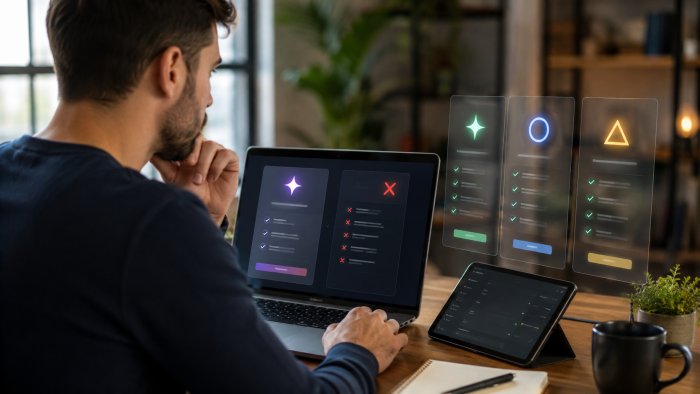
Subtitles versus dubbing: pick your approach first
AI video translators do one of two jobs. Subtitle and transcript tools translate the words and display them as text, leaving the original audio untouched. Dubbing tools replace the audio entirely with a new voice track in the target language, and the best of them clone the original voice and sync the speaker's lips so the result feels native rather than overdubbed.
Subtitles are faster, cheaper and fine when viewers will read. Dubbing is more immersive and tends to lift completion rates, which matters for training, marketing and sales content where tone carries the message. Decide which you need, then use the ranking below to choose within that camp.
Key takeaways
● Synthesia leads overall, producing dubbed, lip-synced video with voice cloning and automatic subtitles in 140+ languages.
● Rask AI, ElevenLabs, Smartcat, Maestra and Wavel cover the dubbing side for different audiences and budgets.
● HappyScribe and Rev are the subtitle specialists, with Rev offering human-translated captions for high-stakes video.
● Weigh accuracy, language range, voice quality, lip-sync, editing control, security and price against your specific use case.
What to look for in an AI video translator
Whichever approach you take, the factors that separate a great tool from a frustrating one are consistent:
● Accuracy that preserves meaning, tone and nuance
● Language coverage broad enough for your markets
● Voice quality and cloning for dubbing that sounds natural and on-brand
● Lip-sync, so dubbed speakers do not look mismatched
● Editing control over wording, timing and terminology before you publish
● Format and platform support for the files and channels you already use
● Security and compliance, particularly GDPR and SOC 2 for sensitive content
● Pricing that fits your volume, whether per minute or subscription
At a glance
| Tool | Best for | Approach | Languages | Pricing (approx) |
| Synthesia | Dubbed, lip-synced business video | Dubbing + subtitles | 140+ | Free to try, starting from ~$14/mo |
| Rask AI | Multi-language creator localization | Dubbing | 130+ | Free trial, starting from ~$60/mo |
| ElevenLabs | High-fidelity voice dubbing | Dubbing | 30+ | Free option, starting from ~$6/mo |
| Smartcat | Enterprise scale and reach | Dubbing + subtitles | 280+ | From ~$1,200/yr |
| Maestra AI | Voice library and real-time | Dubbing + subtitles | 125+ | From ~$12/mo |
| Wavel AI | Voice cloning in a studio | Dubbing | 100+ | Starting from ~$25/mo |
| HappyScribe | Accurate translated subtitles | Subtitles | 80+ | Free, from ~$17/mo |
| Rev | Human-translated subtitles | Subtitles | 17 (human) | Free, from ~$25.49/mo |
Figures shift often, so treat pricing and language counts as a guide and confirm the current details with each vendor.
1. Synthesia
Best for: Businesses that want dubbed, lip-synced video in dozens of languages, at scale.
Synthesia tops this list because it does what most translators cannot: it delivers a finished, dubbed video rather than just translated text. Its AI Video Translator turns a single uploaded video into production-ready, dubbed versions in 140+ languages, preserving each speaker's own voice with natural lip-sync. Upload an MP4, MOV or WebM file, or paste a YouTube link, and Synthesia detects the source language automatically, then returns the dubbed version in minutes, complete with high-fidelity voice cloning, state-of-the-art lip-sync and automatically generated subtitles for every language. It covers 140+ languages, including regional accents and variants, and is trusted by more than 90% of Fortune 100 companies.
What makes it feel native is the detail. It keeps each speaker's own voice, detects and keeps multiple speakers distinct, and offers two dubbing modes to handle how languages expand and contract: an adaptive mode that nudges speech speed to sound natural, best for instructional content, and an original mode that holds the video's timing for fast-paced footage. A built-in transcript editor lets you correct wording and lock in preferred terminology before you publish, with secure editing that keeps the original meaning intact.
Distribution is just as considered. Instead of managing a separate file per market, you share one smart link through the Multilingual Player, and each viewer is served their language automatically, with subtitles they can toggle on or off. Because Synthesia is also a complete AI video platform that creates avatar-led videos in 160+ languages, teams can both produce and localize content in one place, which no pure translator offers.
For larger organizations, it layers on live collaboration, analytics and enterprise-grade AI governance, which the company frames as making it the video translation platform regulated industries can take through procurement with confidence. Customers report translating training content into 20 or more languages and saving significant time and cost.
The translator is free to try with no payment method, and paid plans add watermark-free output, more languages, bulk dubbing and API access. If you want dubbing rather than just captions, Synthesia is the strongest choice available.
2. Rask AI
Best for: Creators localizing YouTube and social video at scale.
Rask AI is a dedicated video translation and dubbing platform that handles many languages with voice cloning, lip-sync and multi-speaker support. It is widely adopted for turning one piece of content into many localized versions quickly.
Its end-to-end dubbing focus makes it a capable specialist. Pricing is subscription-based and usage-dependent starts from $60/mo.
3. ElevenLabs
Best for: Teams that prioritize the most natural-sounding dubbed voices.
ElevenLabs is known for high-fidelity AI voices, and its dubbing feature translates video and audio while preserving the speaker's voice and emotional delivery across a solid set of languages. For projects where voice realism is the deciding factor, it is a strong contender.
Its voice quality is the headline strength, though its language range is narrower than some rivals and lip-sync is not its core focus. A free tier is available, with affordable paid plans, so verify current dubbing limits.
4. Smartcat
Best for: Enterprises wanting the widest language reach with human review on tap.
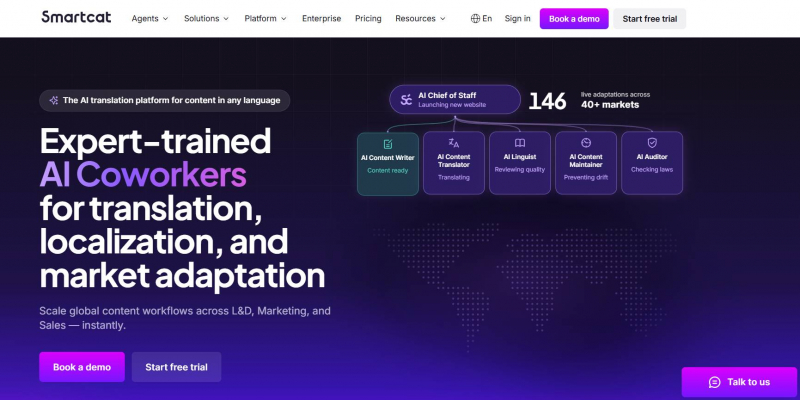
Smartcat is a full localization platform whose media agent transcribes, translates, subtitles and dubs in one automated pass, supporting an exceptionally broad language set with voice cloning and lip-sync, backed by a large linguist marketplace for human review.
It shines at enterprise scale and learns your brand voice over time, though the full platform is heavier than a single-purpose tool. Pricing starts around $1,200 per year, with custom enterprise plans.
5. Maestra AI
Best for: Creators who work live as much as on uploads.
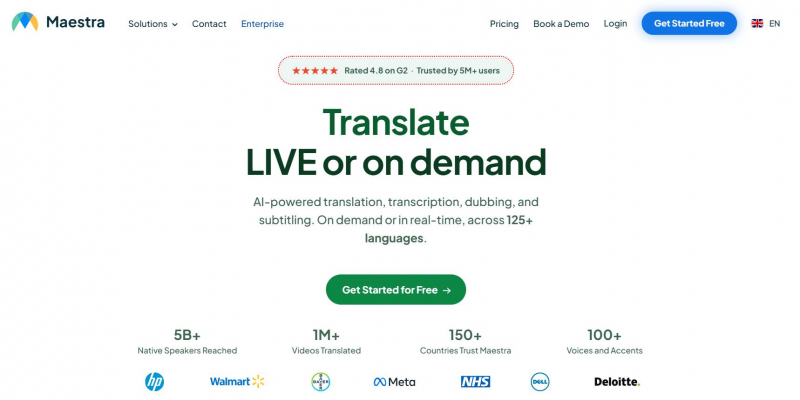
Maestra AI is a browser-based tool built around a large AI voice library, dubbing across many languages with accents and emotional styles, plus voice cloning. It stands out for real-time captions and dubbing for meetings and streams, alongside the standard upload flow.
That live capability suits creators and teams, though accuracy can dip on difficult audio and pricing spans several plans. Plans start around $12 per month.
6. Wavel AI
Best for: Creators wanting one cloned voice across every market.
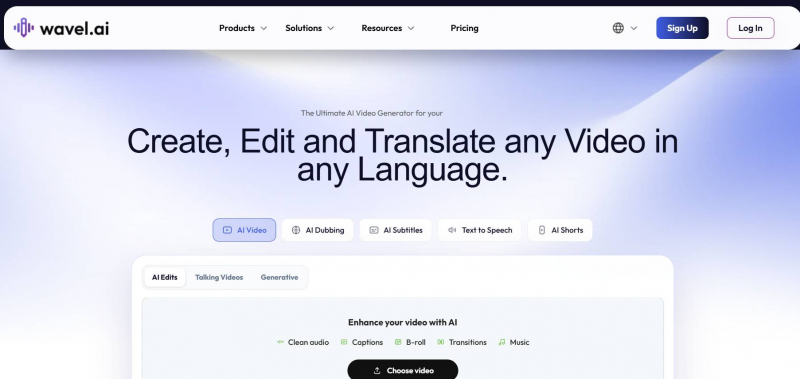
Wavel AI is an all-in-one video studio where dubbing sits alongside editing, with voice cloning as its highlight. Clone a voice once and carry it across 100+ languages, with auto lip-sync, multi-speaker detection and an optional native-speaker review for tone.
It fits creators who want dubbing bundled with broader creation tools. The trade-offs are paying for a full suite and a credit system that can deplete quickly. A free tier is available, with paid plans from around $25 per month.
7. HappyScribe
Best for: Accurate translated subtitles with an optional human upgrade.
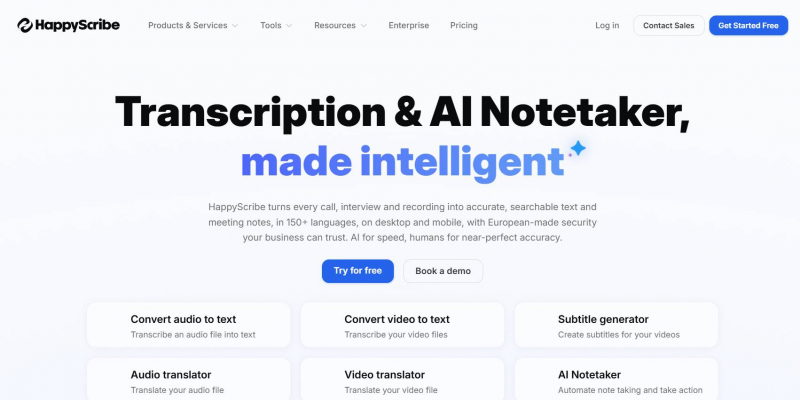
HappyScribe specializes in text-based translation, producing subtitles and transcripts in 80+ languages with a choice of fast AI or human-verified accuracy on the same project. It includes a strong subtitle editor with timing, styling and burn-in, broad import options and standard exports.
Its dual AI-and-human model reassures legal, journalism and research teams, and it is GDPR and SOC 2 Type II compliant with EU data storage. The catch is that it does not do dubbing or voiceovers. A free plan is available, with paid plans from around $17 per month.
8. Rev
Best for: Human-translated subtitles for broadcast and legal video.
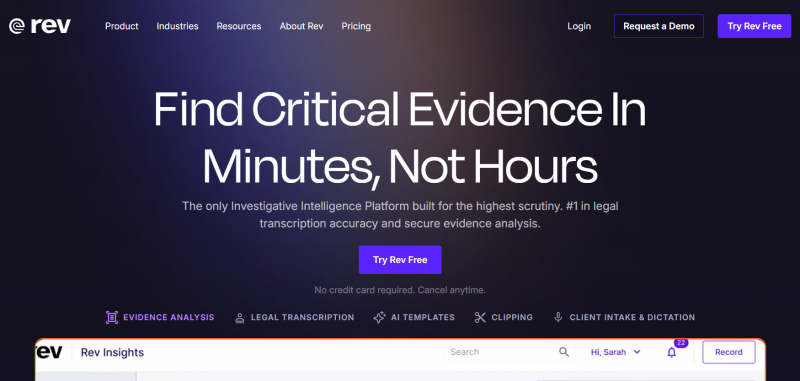
Rev offers human-translated subtitles timed by professional linguists, ideal for broadcast, legal and other high-stakes content, plus AI captions in more languages for faster jobs. The human quality preserves idioms, tone and terminology that AI can flatten.
The trade-offs are cost and speed, with translated subtitles priced per minute, and Rev returns a caption file rather than a finished video, so you style and burn in separately. Confirm current per-minute rates.
How to choose the right tool for you
Start with the subtitles-versus-dubbing decision, since it eliminates most of the list immediately. If you need captions, HappyScribe covers most teams affordably with an optional human upgrade, while Rev fits when only human-perfect subtitles will do. If you need dubbing, Synthesia leads for business video with voice cloning and lip-sync, Rask AI suits creators, ElevenLabs wins on voice realism, Smartcat reaches the most languages, and Maestra or Wavel bundle dubbing into broader studios.
Then pressure-test the essentials for your content: the exact languages you need, whether lip-sync and voice cloning are must-haves, how much editing control you get, and whether the tool meets your security bar. Run one real clip through your two or three finalists and compare the output, because quality is best judged on your own footage rather than a feature list.
Frequently asked questions
What is the best AI video translator?
Synthesia is the best overall AI video translator for business, delivering dubbed, lip-synced video with voice cloning and automatic subtitles in 140+ languages. If you only need translated captions, HappyScribe and Rev are the leading subtitle specialists.
What is the difference between subtitles and dubbing?
Subtitles translate the words into on-screen text while keeping the original audio, whereas dubbing replaces the audio with a translated voice track. Advanced dubbing tools like Synthesia also clone the speaker's voice and sync their lips for a natural result.
Can these tools keep the original speaker's voice?
Yes. Voice-cloning tools such as Synthesia, Rask AI, ElevenLabs and Smartcat can produce dubbed audio that retains the original speaker's tone and style, so the translated version still sounds like the same person.
How accurate is AI video translation?
Accuracy is high for clear, professional speech, and most tools let you review and edit the translation before publishing. For perfect nuance on critical content, HappyScribe and Rev offer human review or fully human-translated subtitles.
Is there a free AI video translator?
Yes. Synthesia lets you run its full translation workflow free without a payment method, and HappyScribe, Wavel AI and ElevenLabs offer free tiers, though watermark-free output and higher usage require paid plans.
Conclusion
AI video translators let you take one video global, either with translated subtitles or fully dubbed, lip-synced audio. The right choice depends on whether you need text or voice, how many languages you serve, and how much quality and control the content demands.
For subtitles, HappyScribe and Rev are the specialists. For dubbing that looks and sounds native at scale, Synthesia is the best overall, pairing voice cloning and lip-sync with deep language support and enterprise controls in a single platform. Pick two or three that match your approach, test them on your own footage, and choose the translator that carries your message cleanly into every language you need.
Post Comment
Share your thoughts about this article.
Be the first to post a comment!