Table of Content
- Why Text-to-Song Technology Is Becoming Popular
- Features That Separate Modern Text-to-Song Platforms
- Understanding the Complete Workflow
- Choosing a Platform That Supports Creative Growth
- A Practical Solution for Creating Songs from Written Ideas
- Why Workflow Matters More Than the Number of Features
- Matching the Right Tool to Different Creative Projects
- Improving Music Production with Additional AI Tools
- Common Mistakes to Avoid When Using Text-to-Song Platforms
- The Future of AI-Assisted Song Creation
- Finding the Right Balance Between Creativity and Technology
Music creation has evolved rapidly over the past few years, with artificial intelligence becoming one of the biggest drivers of innovation. What once required professional recording studios, experienced producers, and advanced music software can now begin with something as simple as a few written lines. This transformation has opened new opportunities for creators who want to turn ideas into music without investing heavily in equipment or technical training.
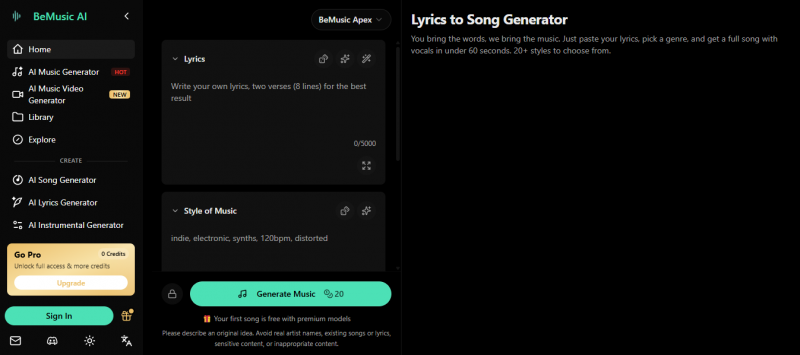
For creators exploring a modern Text to song workflow, these platforms provide an efficient way to move from written lyrics to a playable track in significantly less time than traditional production methods. As competition among AI music platforms continues to grow, understanding their features and workflows becomes increasingly important when selecting the right solution.
Why Text-to-Song Technology Is Becoming Popular
The popularity of text-to-song tools comes from their ability to simplify one of the most complicated parts of music production. Traditionally, transforming lyrics into a complete song required collaboration between lyricists, composers, vocalists, and sound engineers. Today, AI handles much of that technical work while allowing creators to remain in control of the creative direction.
This accessibility is especially valuable for creators who regularly produce digital content. YouTubers, educators, marketers, podcasters, and social media creators often need original music but may not have the budget to hire professional composers for every project. AI helps fill this gap by providing faster and more affordable music creation.
Another advantage is the ability to experiment. Instead of committing to a single musical direction, creators can generate multiple versions of the same lyrics using different genres, moods, or tempos until they discover the version that best matches their vision.
Features That Separate Modern Text-to-Song Platforms
Although many AI music tools appear similar at first glance, their capabilities often differ in meaningful ways. Looking beyond basic song generation helps creators choose a platform that supports long-term creative needs.
Prompt Interpretation
The quality of the generated song depends heavily on how well a platform understands user instructions. More advanced systems analyze emotional tone, musical style, genre preferences, and lyrical context instead of relying solely on individual keywords.
This allows creators to provide detailed descriptions that result in music aligned more closely with their intended creative direction.
Music Customization
Flexibility is another important factor. Some platforms allow users to adjust genre, tempo, vocal style, instrumentation, and emotional intensity before generating a song. These customization options make it easier to produce music suitable for different audiences and content formats.
Creators working on multiple projects often benefit from platforms that support several musical styles rather than producing similar-sounding outputs each time.
Audio Quality
The overall listening experience depends on how naturally the generated music flows. Better AI platforms produce smoother transitions, balanced arrangements, and more polished compositions that require fewer revisions before publication.
High-quality output is particularly valuable for creators publishing content on professional platforms where production standards directly influence audience perception.
Understanding the Complete Workflow
While every platform follows its own process, most text-to-song tools share a similar workflow that makes music creation straightforward even for beginners.
The first step involves preparing the lyrics or creative prompt. Clear descriptions usually produce better results because they provide the AI with stronger creative direction.
Next, users select musical preferences such as genre, mood, tempo, or vocal style. These choices help define the overall character of the song before generation begins.
Once the music is generated, creators can review the output, compare different versions, and refine settings if necessary. This iterative process encourages experimentation without requiring advanced production skills.
Finally, the completed song can be downloaded and incorporated into videos, podcasts, marketing campaigns, or personal music projects depending on the creator's goals.
Choosing a Platform That Supports Creative Growth
For many creators, selecting a text-to-song platform is not only about generating a single song. It is about finding a tool that continues to support new ideas as creative projects become more ambitious.
Platforms that allow users to experiment with multiple genres, regenerate songs quickly, and refine musical direction often provide greater long-term value than tools offering only basic generation features.
As AI technology continues to improve, creators are increasingly looking for platforms that combine simplicity with flexibility, enabling them to explore different creative directions while maintaining consistent quality.
A Practical Solution for Creating Songs from Written Ideas
Among the growing number of AI music platforms, BeMusic AI offers a practical solution for creators who want to transform written ideas into complete musical compositions without navigating complex production software.
Using its AI song generator, creators can generate original songs by selecting mood, genre, and creative style while allowing the platform to handle the technical aspects of composition. This makes it useful for independent musicians, content creators, marketers, and storytellers who need original music without investing significant time in traditional production workflows.
Why Workflow Matters More Than the Number of Features
Many creators compare AI music platforms by counting the number of available features. While feature lists are useful, they do not always reflect the actual user experience. A platform with dozens of advanced options can still feel difficult to use if the workflow is slow or confusing.
A well-designed text-to-song tool should guide users from writing lyrics to generating a complete track in just a few steps. Simple navigation, quick generation times, and easy editing options allow creators to focus on creativity instead of learning complicated software. This efficiency becomes especially valuable for creators who publish content regularly and need a consistent production workflow.
Matching the Right Tool to Different Creative Projects
Different creators have different goals, which means there is no single AI music platform that fits every situation. Independent musicians may look for expressive vocal performances, while marketers often need short, memorable tracks for promotional campaigns. Likewise, educators and podcasters usually prefer subtle background music that complements spoken content.
Choosing a platform based on the intended project often leads to better results than selecting one simply because it offers the largest number of features. Understanding how each tool fits into a specific creative workflow helps users make more informed decisions.
Improving Music Production with Additional AI Tools
Song generation is only one part of the creative process. Many creators also need supporting tools that simplify editing and music development after the initial track has been created.
One useful example is BeMusic AI's AI Instrumental Generator, which helps users create instrumental versions of songs for videos, presentations, podcasts, or live performances. Having access to dedicated tools like this allows creators to expand their projects without starting the production process from scratch every time.
By combining different AI-powered features within the same workflow, creators can produce more polished and versatile audio content while maintaining a consistent creative style.
Common Mistakes to Avoid When Using Text-to-Song Platforms
Many first-time users expect perfect results from a single prompt. In reality, AI music generation works best as an iterative process where prompts are refined until the desired outcome is achieved.
Another common mistake is providing vague instructions. A prompt such as "make a happy song" gives very little creative direction. Including details about genre, instruments, mood, tempo, or intended audience usually produces far better results.
It is also worth reviewing multiple generated versions before selecting a final track. Small differences in arrangement or pacing can significantly improve how well the music fits a particular project.
The Future of AI-Assisted Song Creation
Text-to-song technology continues to evolve as AI models become better at understanding creative intent. Future platforms are expected to provide even greater control over vocal expression, arrangement, genre blending, and production quality while keeping the creation process simple for everyday users.
For independent artists and digital creators, this means fewer technical barriers and more opportunities to experiment with original music. Instead of replacing creativity, AI is becoming a practical partner that helps transform ideas into finished songs faster than ever before.
Finding the Right Balance Between Creativity and Technology
Every creator has a unique way of expressing ideas, and AI music tools are most effective when they support that originality rather than replace it. The best platforms combine ease of use with creative flexibility, allowing users to refine their lyrics, explore different musical directions, and produce songs that match their vision.
As text-to-song technology continues to improve, creators who understand both the strengths of AI and the importance of their own artistic input will be better positioned to produce engaging, original music. Whether the goal is creating demos, publishing digital content, or developing a personal music portfolio, choosing the right workflow and the right platform can make the entire creative process more efficient and enjoyable.
Post Comment
Share your thoughts about this article.
Be the first to post a comment!